September 21, 2026
Halloween Costume Ideas
Read More
No sections found
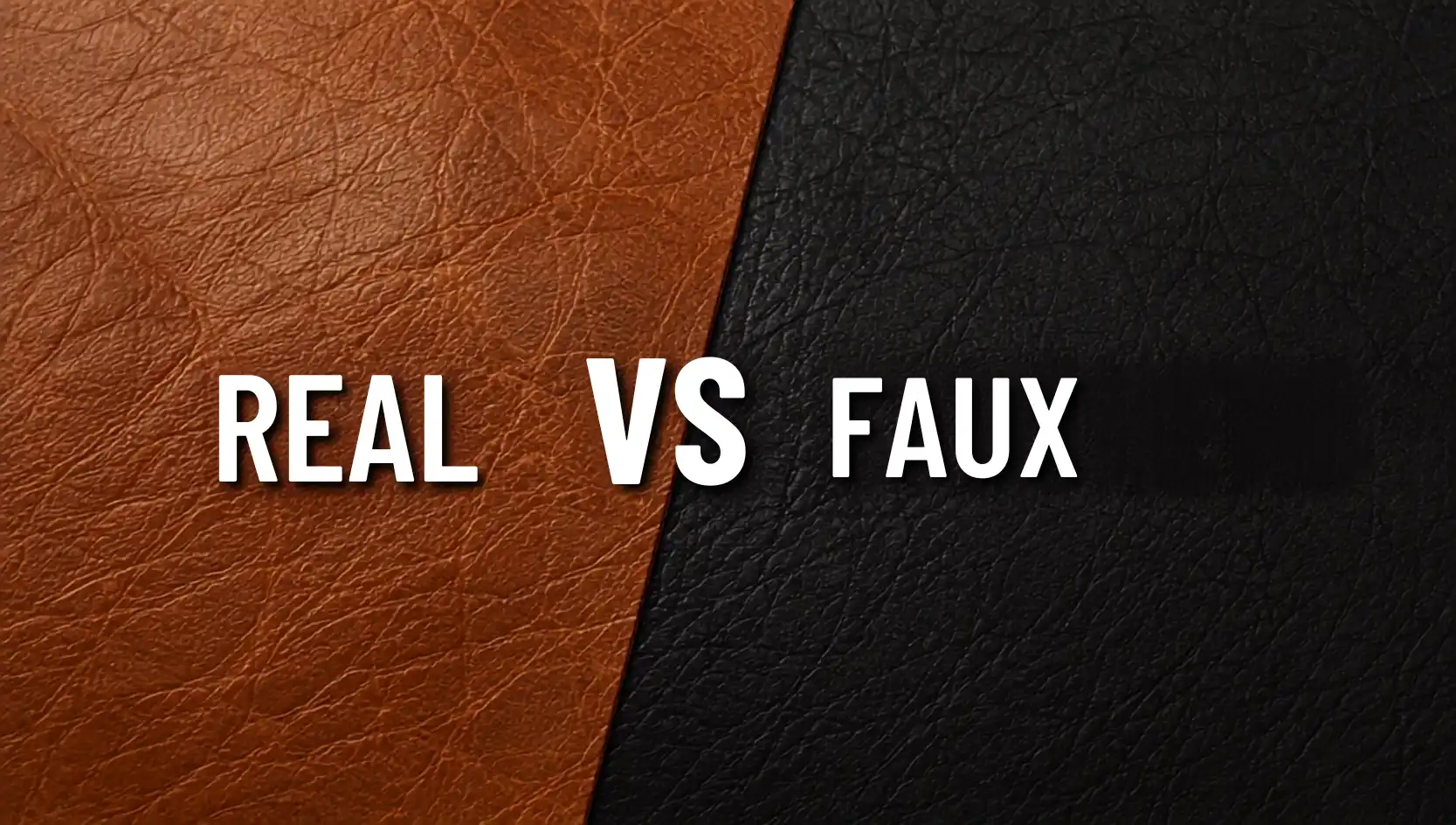
Faux leather has made significant progress. The newer stuff can genuinely fool you at a glance, and these days it hides behind a nicer label too, called "vegan leather." Look a little closer, though, and it is still a different material from real leather. The split itself is easy to explain. Real leather is made from the hide of an animal, typically a cow or buffalo, while faux leather is made from plastic, most often PU. That is pretty much the whole story, because one being natural and the other man-made is what drives everything else, from how they feel in your hand to how they wear and what you end up spending.
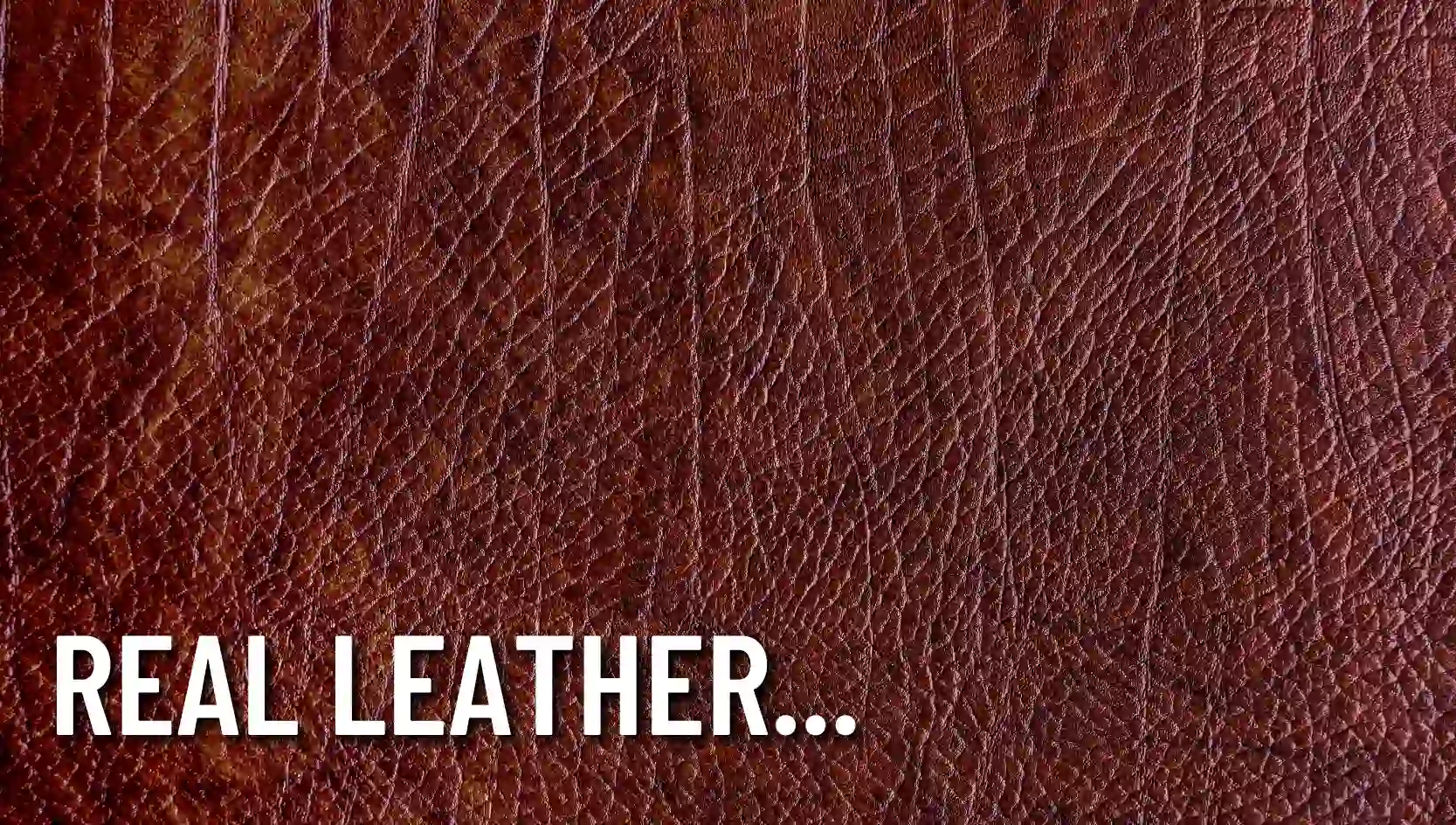
Real leather starts as animal skin, which the trade calls hide. Although cattle are also the primary source of leather, it is also produced from buffalo, sheep, goats, and pigs. The hide gets cleaned and then tanned and that tanning step is what keeps it from rotting and leaves you with a material that stays strong that help it stay supple for years.
Now, a brief word about genuine leather because that label trips people up constantly. Yes, it is genuine; however, it occupies a position at the base of the quality hierarchy. Full-grain and top-grain grades are the ones that are most desirable, as they last the longest and only improve with age. So real and good are not the same promise and the grade is the part that matters.
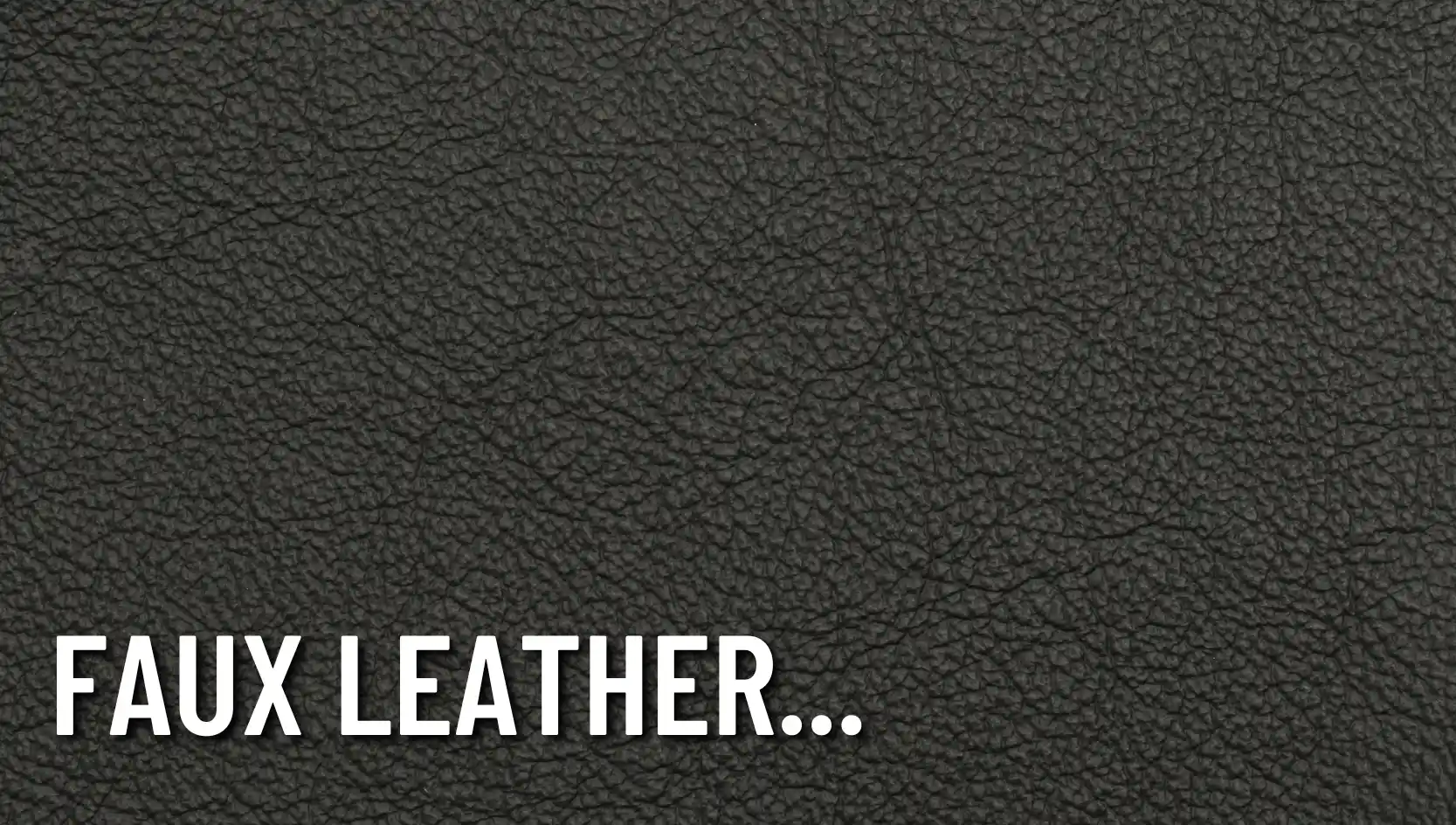
Faux leather is made by people, not animals, and is built to look like real leather. It may also be referred to as synthetic leather, artificial leather, fake leather, or vegan leather. They all mean the same thing, but no animal hide is used.
It is made with a simple, thin layer of plastic that is attached to the fabric. On top of this, a leather-like pattern is applied by a machine.
There are two main plastics is Polyurethane (PU) is a soft material that feels like the most real leather. The other one is PVC (polyvinyl chloride), which is harder, but it cracks more. After knowing this, you have a question that Does PU leather different from faux leather? The answer is simple, No, PU leather is just one type of faux leather and it's simply the most common type.
Give it a proper look. Real leather never comes out perfectly even, so you will spot little marks, faint creases, and color that shifts across the surface. Far from flaws, those are exactly what you want to see. The subsequent indicator is touch. It will not feel shiny and slick like glass, and if you press a thumb into the soft surface that gives wrinkles the way skin does. Then there is the smell that's the hardest thing to fake. It is warm, earthy, faintly animal, and instantly familiar once you have handled the real thing.
Fake leather usually looks a touch too flawless. The grain is in a pattern that repeats a little too neatly, and giving machine-perfect regularity is the giveaway. In press on a fake leather you feel the difference right away, because it stays cool and slightly slippery, and instead of wrinkling it just dimples and springs straight back. It is resolved by the nose. There is a plastic note, only a faint plasticky or chemical whiff with a small bit like something fresh out of the packaging.
Short on time in a store? Run through this:
Look: real leather shows all small marks and natural flaws, but the other fake leather looks strange.
Touch: real leather wrinkles under a press, but the fake leather just dents and slightly pops back.
Smell: real leather is warm and earthy, but the other fake leather smells like plastic.
Edges: real leather has rough, fuzzy edges, while fake leather edges look clean and sealed.
Price: real leather is not cheap, so a bargain-bin price is usually a red flag.
This is where real leather really earns its keep. A well-made full-grain piece can go 20 years or more, and it asks for very little in return. The best part is that age actually suits it. The scuffs and knocks it picks up do not read as damage. They develop patina, a deep, lived-in sheen that renders an old leather purse more
Faux leather is a different matter. It needs almost no upkeep, but it also bows out far sooner. So how long does faux leather actually last? Realistically, somewhere in the 2 to 8 year range, with cheap PU sometimes flaking inside a year and thicker PVC hanging on a little longer. The unkind part is the way it goes. It does not soften or fade gracefully. It cracks, then peels, and once that starts, there is no bringing it back.
Real leather costs more at first. You pay for a natural material that lasts. Its always think about the long run, but if it lasts 20 years, the cost per year is small.
Get faux leather for less. That is why it is used in fast fashion and cheap furniture. But it wears out fast. If you keep buying it again, that low price adds up.
Real leather needs a little care. Remove dust. Keep it out of strong sun. Rub in leather conditioner now and then. This stops it from drying out and cracking. A little care keeps it soft for years.
Faux leather is easy to clean with using of warm water and a single drop of mild soap and cleaned with a soft cloth. Wipe the surface off. Then dry it with another cloth. This keeps dirt from building up. It never needs conditioner. But no care will make it last like real leather.
The green question is messier than it looks. In leather's favor, most hides are a leftover of the meat and dairy trade, so the skin would be tossed anyway, and a product that lasts decades keeps you from buying more. The mark against it is tanning, which can lean on some harsh chemistry when it is done cheaply rather than carefully.
Faux leather skips animal hide entirely, and for plenty of shoppers that alone settles it. The catch is what it is made of. Plastic and petroleum do not break down in any hurry, and once you add in how fast the stuff wears out and gets replaced, the waste piles up over the years. Neither side is really clean so it really comes down to which compromise you can live with.
Honestly, it comes down to the job. Faux leather is the right call when the budget is tight, when you would rather skip animal products, or when you are buying something you will not own for long.
For the long haul, get real leather. It feels better in the hand and ages into something with real character. It is perfect for a bag, wallet, belt or jacket that you plan to keep for years. If you do buy real leather, look for full-grain or top-grain, and don’t be fooled by a tag that reads only “genuine leather.” Either way, the trick is knowing what you are paying for, and a quick glance, push, and sniff will typically resolve it on the spot.